

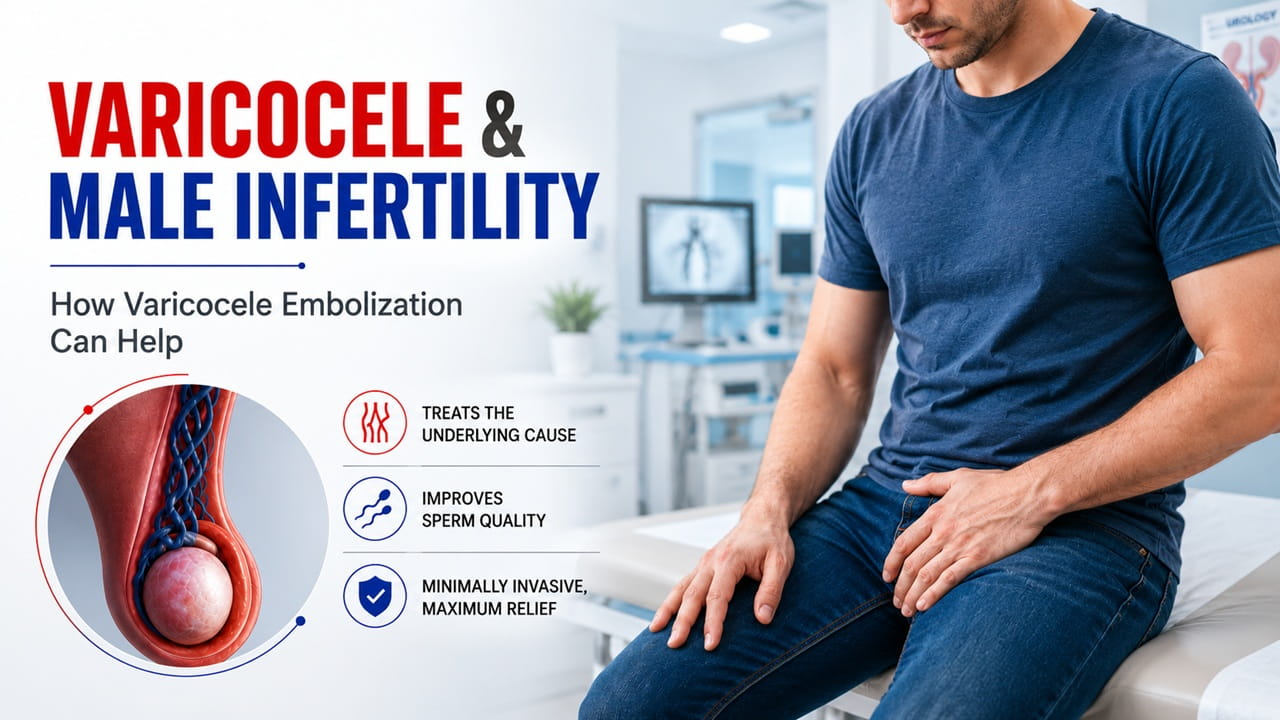
If you’ve been going through a fertility workup and a varicocele turned up on your exam, you probably have two questions on your mind: does this actually affect fertility, and what can be done about it that doesn’t involve surgery? Varicocele embolization is one answer to that second question a minimally invasive, catheter-based treatment that closes off the abnormal veins causing the problem, without any incision.
This article explains what a varicocele is, how it can affect fertility, how embolization works, and how it compares with surgical repair so you have a clear picture before your next appointment with a urologist or interventional radiologist.
What Is a Varicocele?
A varicocele is an enlargement of the veins within the scrotum, specifically the network of veins called the pampiniform plexus that drains blood from the testicle. Think of it as similar to a varicose vein in the leg the valves inside these veins that are supposed to keep blood flowing in one direction stop working properly, so blood pools and the veins become swollen and dilated.
Varicoceles are common they occur in around 15% of men in the general population, but appear far more often in men being evaluated for infertility. They almost always develop on the left side, due to the way the left testicular vein drains into the kidney vein at an angle that makes it more prone to reflux, though they can occasionally occur on both sides.
Many men have no symptoms at all and only find out they have a varicocele during a fertility evaluation or routine physical exam. Others notice a dull ache, heaviness, or a visible or palpable swelling in the scrotum, especially after standing for long periods or at the end of the day.
How Does a Varicocele Affect Fertility?
A varicocele is one of the most common identifiable causes of male infertility. It’s found in a substantial proportion of men being evaluated for primary infertility, and in an even higher proportion of men with secondary infertility meaning they’ve previously fathered a child but are now struggling to conceive.
The exact mechanism isn’t fully understood, but the leading explanation involves the pooled blood raising the temperature around the testicle. Since sperm production depends on the testicle staying slightly cooler than the rest of the body, this temperature increase along with reduced blood flow and a build-up of substances called reactive oxygen species can interfere with sperm development. This is reflected in semen analysis, where varicocele is commonly associated with:
- Lower sperm count (concentration)
- Reduced sperm motility (how well sperm move)
- Abnormal sperm shape (morphology)
- Increased sperm DNA fragmentation
It’s important to be clear that not every man with a varicocele has fertility problems, and not every man with a varicocele needs treatment. Many men with varicoceles father children without any difficulty. Treatment is generally considered when a varicocele is present alongside documented infertility and abnormal semen parameters, and other causes have been ruled out. The right varicocele treatment depends on the severity of the condition, fertility goals, symptoms, and semen analysis results. Options may include embolization or surgical repair.
What Is Varicocele Embolization?
Varicocele treatment may involve either surgery or a minimally invasive Pinhole procedures such as varicocele embolization. Varicocele embolization is a non-surgical, image-guided procedure performed by an interventional radiologist. Instead of cutting into the scrotum or groin, the doctor closes off the faulty vein from the inside, through a small puncture elsewhere in the body.
Here’s how it typically works:
- A thin catheter is inserted through a small puncture, usually in the neck, groin, or arm, under local anesthesia.
- Using X-ray guidance, the catheter is threaded through the venous system down to the testicular (gonadal) vein a process called venography, which also confirms the diagnosis and maps the abnormal veins.
- Once the faulty vein is located, embolic material typically small coils, a sclerosing agent, or medical glue is used to seal it shut.
- Blood flow reroutes through healthy veins, and the abnormal, pooled blood flow that was causing the varicocele resolves.
The entire procedure usually takes around 30 to 90 minutes, and most men go home the same day.
How Does Embolization Compare with Surgery (Varicocelectomy)?
Varicocelectomy is the traditional surgical approach most often performed today as a microsurgical procedure, where a surgeon makes a small incision near the groin and ties off the abnormal veins under a microscope. It remains the most established treatment and is often considered the reference standard, particularly the microsurgical technique.
Embolization was developed as a less invasive alternative, and several studies comparing the two report broadly similar outcomes:
| Varicocele Embolization | Varicocelectomy (Surgery) | |
| Anesthesia | Local, often with light sedation | General, spinal, or local depending on technique |
| Incision | None small needle puncture only | Small incision near the groin |
| Hospital stay | Outpatient, same-day | Usually outpatient, but with a surgical recovery period |
| Recovery time | Around 1–2 days | About 1–2 weeks |
| Effect on sperm parameters | Improvement in sperm concentration and motility reported in multiple studies | Improvement in sperm concentration and motility reported in multiple studies |
| Recurrence rate | Slightly higher in some studies | Generally low, especially with microsurgical technique |
| Risk of hydrocele (fluid build-up) | Very low lymphatic vessels aren’t disturbed | Small but recognized risk |
| Risk to testicular artery | Minimal, since no dissection is involved | Small risk with non-microsurgical techniques |
Research directly comparing embolization and surgery has generally found comparable improvements in semen parameters and pregnancy rates between the two approaches, with no clear statistical advantage for either technique. Where the two tend to differ is in recovery and the specific complication profile. embolization avoids any risk of fluid collection around the testicle (a recognized surgical side effect) and generally involves a faster return to normal activity, while microsurgical varicocelectomy has an extremely well-established track record and, in some comparisons, a somewhat lower rate of the varicocele coming back.
Can Varicocele Embolization Improve Fertility?
For men with a confirmed varicocele and abnormal semen parameters, embolization has been shown in multiple studies to meaningfully improve sperm concentration, motility, and normal sperm shape over the following three to twelve months. Pregnancy rates reported in comparative studies of embolization have generally been similar to those seen after surgical repair.
It’s worth setting realistic expectations here treating a varicocele improves the underlying environment for sperm production, but it doesn’t guarantee pregnancy, particularly if other fertility factors on either partner’s side are also involved. Your fertility specialist or urologist will usually want a complete evaluation of both partners before attributing infertility solely to the varicocele.
What Happens During Varicocele Embolization procedure?
If you’re scheduled for the varicocele embolization procedure, here’s generally what to expect:
- Before the procedure: You’ll usually have an ultrasound to confirm the varicocele and rule out other causes of scrotal swelling.
- During the procedure: You’ll be positioned on the table, and the puncture site is numbed with local anesthetic. Light sedation is often offered to help you relax, though you’ll typically remain awake. Most men describe mild discomfort at the puncture site rather than significant pain.
- After the procedure: A small dressing covers the puncture site no stitches are needed. You’ll be monitored for a short time before going home the same day.
Recovery and Side Effects
Recovery from varicocele embolization is typically quick and straightforward:
- Mild discomfort or bruising at the puncture site for a few days
- A dull ache or heaviness in the scrotum for a short period, similar to pre-treatment symptoms, which settles as the vein closes
- Most men return to normal activity, including desk work, within a day or two
- Strenuous exercise and heavy lifting are usually avoided for about a week
Serious complications are uncommon. The most frequently discussed risks include the embolic material shifting from its intended position (coil migration), a small chance the varicocele isn’t fully resolved or recurs, and rare vein-related irritation. Because there’s no incision or tissue dissection, risks like hydrocele formation or injury to the testicular artery both recognized surgical risks are considerably lower with embolization.
Who Is a Candidate for Varicocele Embolization?
Embolization tends to be a good option for men who:
- Have a confirmed varicocele on ultrasound, along with documented infertility and abnormal semen parameters
- Want to avoid surgery, general anesthesia, or a longer recovery
- Have a varicocele that has recurred after previous surgical repair
- Have scrotal pain or heaviness attributed to the varicocele
- Prefer a same-day, minimally invasive approach
As with any fertility-related decision, candidacy is best assessed jointly by an interventional radiologist, based on your physical exam, semen analysis, and scrotal ultrasound findings.
Frequently Asked Questions
1. Can a varicocele cause male infertility?
Yes, it’s one of the most common correctable causes of male infertility, though not every man with a varicocele will have fertility problems. It’s typically the combination of a varicocele with abnormal semen parameters that prompts treatment.
2. Does embolization improve sperm count?
In men with abnormal baseline semen parameters, studies have generally shown improvement in sperm concentration, motility, and morphology in the months following treatment, though individual results vary.
3. Is embolization better than surgery?
Neither is definitively “better” both have comparable success in improving semen parameters and pregnancy rates in most studies. Embolization offers a faster recovery and avoids an incision, while microsurgical varicocelectomy has a longer track record and, in some studies, a slightly lower recurrence rate.
4. What is the recovery time after varicocele embolization?
Most men return to normal daily activity within one to two days, with strenuous exercise typically avoided for about a week.
5. Can varicocele be treated without surgery?
Yes embolization is a non-surgical, catheter-based alternative to traditional varicocele surgery, performed by an radiologist without any incision.
6. Can a varicocele come back after varicocele embolization?
It’s possible, though uncommon. If a varicocele does recur, it can often be re-treated, either with a repeat embolization or, in some cases, surgery.
7. Is varicocele embolization safe?
Yes, for appropriately selected patients. It’s performed under local anesthesia, has a low complication rate, and avoids the specific surgical risks associated with an incision near the testicle.
8. When does a varicocele need treatment?
Treatment is generally considered when a varicocele is associated with infertility and abnormal semen parameters, when it causes persistent pain or discomfort, or in some cases of testicular size discrepancy in adolescents. A varicocele found incidentally, without symptoms or fertility concerns, often doesn’t need treatment at all.
Talk to an Interventional Radiologist
If a varicocele has come up during your fertility evaluation, it’s worth understanding both your treatment options before deciding on a next step. Embolization offers an effective, minimally invasive way to treat the underlying vein problem, often with a quicker return to normal life than surgery.
Dr. Akash Bansal, an interventional radiologist, evaluates each case individually reviewing ultrasound findings, semen analysis, and symptoms to determine whether embolization Treatment is a suitable option, using minimally invasive pinhole Procedures performed at a vascular and interventional clinic.
If you’re exploring treatment for a varicocele, a consultation With Dr. Akash Bansal is a good starting point to understand which approach fits your situation.
Disclaimer
This information is for educational purposes only and should not be considered a substitute for professional medical advice, diagnosis, or treatment.