

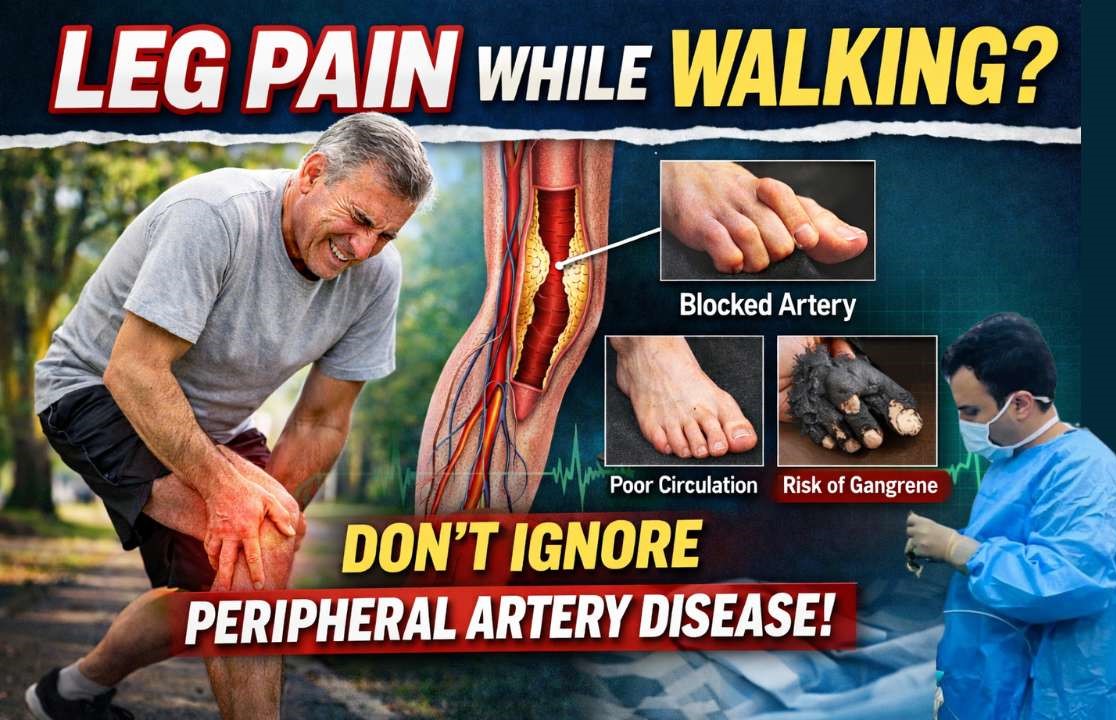
Leg Pain While Walking? Why You Shouldn’t Ignore Peripheral Arterial Disease (PAD)
Do you feel sharp leg pain while walking? Many people think it is just a normal part of getting older. They believe their muscles are just tired. But if your legs hurt every time you walk and feel better only when you stop, it could be a serious warning sign. You might be dealing with Peripheral Arterial Disease (PAD).
Ignoring this pain can be dangerous. It is very important to know your PAD treatment options early on. Catching it in time can save your legs and your health. Today, we will discuss peripheral artery disease symptoms and the most effective claudication treatment available.
As a dedicated vascular and interventional clinic, we help patients overcome this exact pain every single day. At Dr. Akash Bansal Vascular & Interventional Clinic, we want to help you understand your body so you can make the right choices for your health. Let us break down what this disease is and how we can fix it.
Recognizing the Early Warning Signs
Let us talk about how this condition actually feels. At first, you might notice calf pain when walking. It usually starts when you are climbing stairs or walking quickly. Some people get severe leg cramps after walking short distances. You might even feel like you have very heavy legs while walking, making it hard to take the next step.
A very clear sign of this disease is leg pain that stops when resting. Doctors call this specific symptom intermittent claudication. It happens because your leg muscles are literally crying out for oxygen.
You might also notice other poor blood circulation in legs symptoms. For example, you might suffer from cold feet and leg pain, especially at night when you are lying in bed. Some patients notice that the hair on their toes stops growing, or their toenails become thick and brittle. If you have diabetes, diabetic foot care becomes absolutely critical here. Poor blood flow makes it very hard for simple cuts or blisters on your feet to heal properly.
Why is This Happening to My Legs?
Why is the blood not reaching your leg muscles? The root cause is almost always blocked arteries in legs.
As we age, sticky substances like fat, cholesterol, and calcium can build up inside our blood vessels. This is called plaque buildup in arteries. Medically, this condition is known as atherosclerosis in legs. Think of it like rust clogging an old water pipe. The water simply cannot flow through.
When this happens in your lower body, it leads to vascular disease in legs. To find out if this is happening to you, doctors use a very simple and painless test. It is called the Ankle-brachial index (ABI) test. This test compares the blood pressure in your ankle to the blood pressure in your arm. If the pressure in your ankle is much lower, it tells us that there is a blockage somewhere in your leg.
Why do my legs hurt when I walk but stop when I rest?
This is the most common question patients ask us. When you walk or exercise, your leg muscles work very hard. Because they are working hard, they demand a lot of oxygen and fresh blood.
But if you have narrowed or blocked arteries, the blood simply cannot flow fast enough to meet the demand. The muscles cramp up and cause a sharp, burning pain. When you sit down and rest, your muscles relax. They do not need as much oxygen anymore. Because the demand drops, the small amount of blood getting through is enough, and the pain goes away. This is the classic cycle of claudication.
What happens if peripheral artery disease is left untreated?
It is completely normal to feel worried about visiting a doctor. However, ignoring this pain is very dangerous. If you do not seek help, the plaque buildup will get worse. The artery will become narrower and narrower.
Eventually, the blood flow might stop completely. When tissues do not get blood, they begin to die. This can cause open sores that will not heal. It can also cause the skin on your toes or feet to turn black. This is called gangrene.
For many patients, especially those with unmanaged diabetes, untreated PAD can lead to losing a toe, a foot, or even a leg. This is why amputation prevention is our primary goal. Getting proper leg artery blockage treatment early on saves limbs and saves lives.
Can PAD be cured without surgery?
Yes, it absolutely can. Many patients delay going to the doctor because they are scared of big operations. They want safe alternatives to bypass surgery for legs.
The great news is that modern medicine offers amazing non-surgical PAD treatment. We specialize in minimally invasive pinhole procedures. You do not need large surgical cuts. You do not need to spend weeks recovering in a hospital bed to feel better. Our main focus is to restore blood flow to legs without surgery. We use advanced, pinhole techniques that get you back on your feet quickly and safely.
How does an interventional radiologist treat blocked leg arteries?
An interventional radiologist uses tiny, high-tech tools to fix the problem from the inside out. As a specialist, an interventional radiologist for PAD performs a procedure called angioplasty for peripheral artery disease.
Here is how it works in simple terms. First, we make a tiny pinhole in your skin, usually near your groin. It is so small that it does not even need a stitch, making it one of the most highly preferred scarless procedures. Through this tiny hole, we gently guide a thin, flexible tube (called a catheter) into the blocked artery. We watch everything on a live X-ray screen to be incredibly precise.
Once we reach the blockage, we use balloon angioplasty for leg arteries. We inflate a tiny medical balloon inside the artery. This balloon pushes the hard plaque flat against the walls, opening up the vessel wide. The blood can immediately rush back into your leg.
Often, we will leave a small, flexible metal mesh tube inside the artery to hold it open permanently. This process is called arterial stenting in legs. It is highly safe, highly effective, and it saves you from major open surgery.
Finding the Best Care in Delhi NCR
If you are suffering from leg pain, finding the right doctor is the most important step. You need a trusted vascular specialist in delhi who understands your exact problem.
Our facility is a top-rated minimally invasive surgery clinic, delhi residents rely on. We provide world-class PAD treatment in Delhi. Whether you need an interventional radiologist in delhi, are looking for an interventional radiologist in noida, or need to consult an interventional radiologist in gurgaon, our clinic doors are open to you.
We offer comprehensive care. Whether you need simple artery clearing or complex care from an interventional oncologist for tumor-related issues, Dr. Akash Bansal is trusted by hundreds of patients. He is recognized as a leading Dr. Akash Bansal vascular specialist.
If you are currently searching online for an “interventional radiologist near me,” you have found the right place. We offer the safest non-surgical leg pain treatment Noida and Delhi patients can access.
Frequently Asked Questions
To help you feel more comfortable, here are the answers to some common questions we get at the clinic.
Is walking good for peripheral artery disease? Yes, it is actually very good for you. Supervised walking programs help your body naturally create new, tiny blood vessels around the blockages. This slowly improves blood flow over time. However, walking alone is not a cure. You should always combine healthy walking habits with proper medical treatment to fully clear the main blockages.
What is the recovery time for PAD angioplasty? Because this is a pinhole procedure, the recovery is remarkably fast. Most of our patients are able to walk out of the clinic and go home the exact same day. You will only need to rest for a day or two. After that short rest, you can return to your normal daily activities. Best of all, you will notice that the severe pain you had while walking is finally gone.
Leg pain should never steal your independence. If you cannot walk to the park or play with your children or grandchildren without stopping in pain, it is time to take action. Do not wait for the problem to get worse. Contact our vascular and interventional clinic Delhi today to schedule your consultation and get your active life back!
Conclusion
Don’t let leg pain or swelling dictate your life. If you are experiencing symptoms, early intervention is key to a fast, non-surgical recovery. Contact Dr. Akash Bansal Vascular & Interventional Clinic today to schedule your consultation and take the first step toward a pain-free life!
Disclaimer: The content provided in this blog is for educational and informational purposes only. It is not intended to be a substitute for professional medical advice, diagnosis, or treatment. Always seek the advice of a qualified healthcare provider or an interventional radiologist like Dr. Akash Bansal with any questions you may have regarding a medical condition, symptoms, or treatment options. Never disregard professional medical advice or delay in seeking it because of something you have read on this website.