

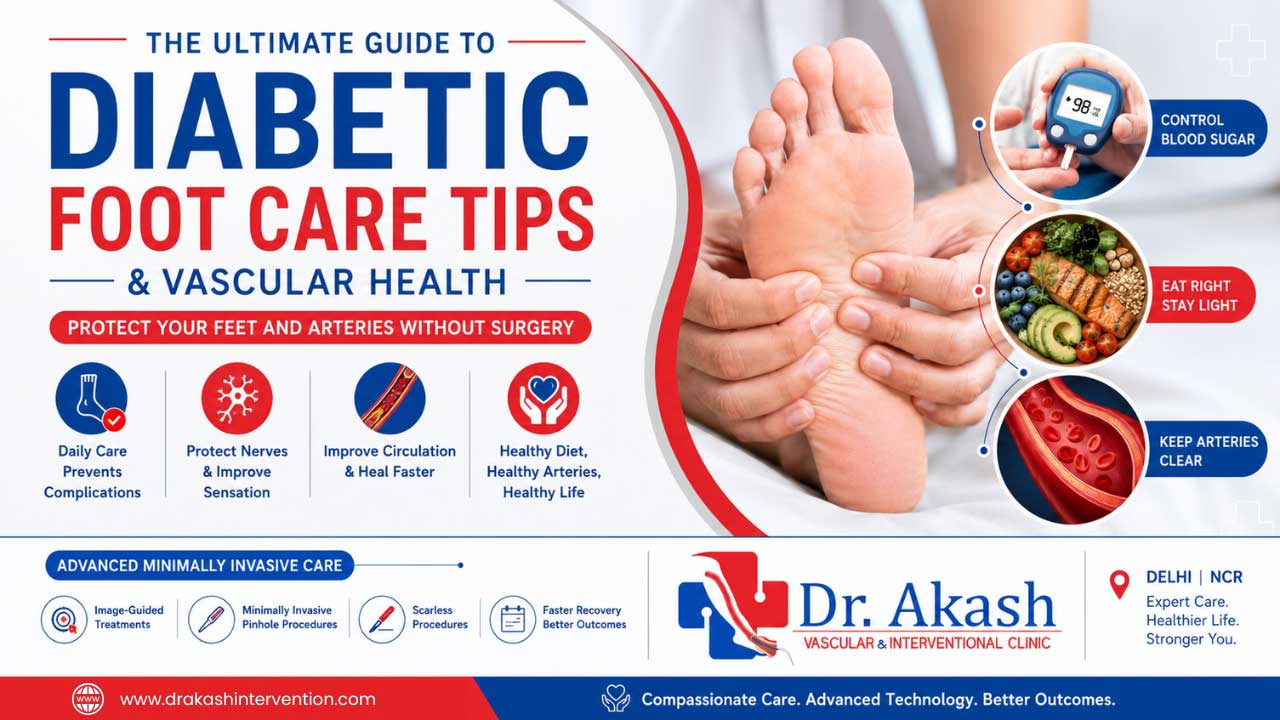
Living with high blood sugar requires constant attention to your body, especially your lower limbs. Many people do not realize that blood sugar directly impacts your circulatory system. Over time, it can damage both your nerves and your blood vessels, leading to severe complications.
If you are looking for practical diabetic foot care tips or trying to understand how to prevent blocked arteries with diet, you are in the right place. In this comprehensive guide, we will break down simple daily habits, dietary choices, and advanced non-surgical treatment options.
At Dr. Akash Bansal Vascular & Interventional Clinic, we believe in empowering patients with the right knowledge to catch problems early and avoid traditional, major open surgery altogether. Let’s dive into how you can keep your feet healthy and your arteries completely clear.
Part 1: Diabetic Foot Care Tips & Managing Complications
How to Take Care of Diabetic Feet Daily
When you have diabetes, small problems like a minor blister, a small cut, or dry skin can quickly turn into deep, serious wounds if ignored. Learning how to take care of diabetic feet is an essential daily investment in your long-term health.
Here is a simple, humanized checklist you can follow every day:
- Inspect your feet daily: Look closely at your soles, heels, and the spaces between your toes. Look out for any redness, swelling, cuts, or blisters. If you cannot bend down, use a small mirror or ask a family member to check for you.
- Wash with lukewarm water: Clean your feet daily using mild soap. Always check the water temperature with your elbow first to ensure it is not too hot, as nerve damage can prevent you from feeling burns.
- Dry gently and moisturize: Pat your feet dry with a soft towel instead of rubbing them harshly. Apply a good moisturizer to prevent skin cracking, but never apply lotion between your toes, as trapped moisture can cause fungal infections.
- Never walk barefoot: Even inside your house, always wear comfortable socks and well-fitted slippers. A tiny, unseen object on the floor can cause a wound that you might not even feel right away.
- Cut toenails straight across: Do not cut the corners of your toenails deeply, as this can lead to painful ingrown toenails and dangerous skin infections.
Following daily foot care for diabetes patients significantly reduces the risk of minor scratches turning into non-healing ulcers.
Understanding Nerve Damage: Signs of Diabetic Nerve Damage in Feet
One of the most common complications of prolonged high blood sugar is neuropathy, or nerve damage. When nerves in your lower legs become damaged, they stop sending correct signals to your brain.
Knowing the early signs of diabetic nerve damage in feet can save you from severe complications down the road. Patients often describe feeling a strange, persistent tingling, a sensation of “pins and needles,” or a complete loss of feeling. You might step on a sharp pin or develop a friction blister from tight shoes and not notice it for days because your pain receptors are muted.
Another very common complaint from patients visiting our vascular and interventional clinic is a burning sensation that worsens at night. Finding a proper diabetic foot numbness treatment or a targeted diabetic foot burning sensation treatment starts with controlling your blood sugar levels and consulting an experienced interventional radiologist. Keeping the nerves healthy prevents unnoticeable injuries that later turn into deep, open wounds.
Why Do Diabetic Feet Get Swollen?
A question we frequently hear in our clinic is: why do diabetic feet get swollen?
Swelling, or edema, in the feet and ankles of diabetic individuals usually happens due to a mix of poor blood circulation, kidney issues, or spending long hours sitting down without moving. When your blood vessels lose their elasticity due to sugar buildup, blood struggles to flow back up to your heart efficiently. This pooled fluid causes noticeable swelling, tightness in the skin, and a heavy feeling in your legs.
If you notice sudden swelling in just one leg accompanied by severe pain, it could indicate a deep vein blood clot. In such situations, reaching out to an experienced dvt doctor or finding a trusted vascular specialist in delhi immediately is critical to preventing further complications.
Part 2: Healing Diabetic Ulcers & The Role of Modern Medicine
What is the Best Treatment for Diabetic Foot Ulcer?
When a foot wound fails to heal over several weeks, it develops into a diabetic foot ulcer. This is a serious condition that requires immediate, expert medical care. If you are wondering what is the best treatment for diabetic foot ulcer, the answer lies in restoring rich, oxygenated blood flow to the wound site. Without proper blood supply, your skin cannot regenerate or fight off bacteria.
At Dr. Akash Bansal Vascular & Interventional Clinic, we look beyond traditional wound dressings. To heal an ulcer completely, an interventional radiologist uses advanced imaging techniques to check if the main arteries bringing blood to your foot are narrowed or blocked. If a blockage is found, we can open up the blood vessel using tiny, minimally invasive pinhole procedures like balloon angioplasty. Once the natural blood flow is restored, the ulcer receives the oxygen and nutrients it needs to heal rapidly, drastically lowering the risk of infection.
The Truth About Diabetic Foot Infection Home Remedies
It is natural to look up diabetic foot infection home remedies online when you first notice a small wound or redness. Many people try warm water soaks, herbal pastes, or over-the-counter antiseptic creams.
Important Clinical Note: While general hygiene habits are excellent for prevention, attempting to cure an active diabetic foot infection at home with DIY remedies can be highly dangerous.
Diabetic infections can spread deep into the tissue and bone very quickly due to compromised immunity and poor circulation. Relying on home remedies delays proper medical diagnosis, which can make a controllable issue much worse. If you notice any pus, a foul odor, spreading redness, or if you develop a fever, skip the home remedies entirely. You need to visit a dedicated diabetic foot clinic near me or consult a trusted diabetic foot specialist near me right away for proper clinical evaluation and advanced antibiotic or vascular care.
How to Prevent Diabetic Foot Complications Early
The goal of proper foot care is always prevention. To know how to prevent diabetic foot complications, you must take a dual approach: manage your daily lifestyle choices and build a relationship with a trusted medical expert. Keeping your blood sugar levels stable through medication and regular exercise is your primary shield.
Additionally, avoid smoking completely, as smoking narrows your blood vessels and makes poor circulation significantly worse. Partnering with the best doctor for diabetic foot ulcer in delhi for routine foot checkups ensures that early signs of nerve damage or poor blood flow are caught before they turn into major health emergencies.
Part 3: Preventing Blocked Arteries with Diet
Just as your feet need direct daily care, your inner blood vessels require internal protection. Plaque buildup inside your blood vessels reduces natural blood flow, leading to conditions like peripheral artery disease (PAD). This can cause severe leg pain while walking, cold feet, and slow wound healing.
Let’s explore how to prevent blocked arteries with diet using simple, everyday nutritional choices.
Foods to Improve Blood Circulation in Legs
What you put on your plate directly affects how smoothly blood flows through your limbs. Incorporating specific foods to improve blood circulation in legs helps relax your blood vessels and keeps your blood flowing easily.
- Garlic and Onions: These contain natural sulfur compounds that help blood vessels dilate, making it easier for blood to travel down to your toes.
- Citrus Fruits: Oranges, lemons, and grapefruits are packed with Vitamin C, a powerful antioxidant that strengthens blood vessel walls.
- Leafy Greens: Spinach, kale, and methi are rich in nitrates, which your body converts into nitric oxide—a natural molecule that relaxes and opens up arteries.
- Fatty Fish or Flaxseeds: Rich in Omega-3 fatty acids, these help reduce internal inflammation and keep your blood smooth and less sticky.
Focusing on a poor circulation in legs treatment diet gives your body the baseline nutrients it needs to protect your veins and arteries from plaque buildup.
TOP 10 FOODS THAT UNCLOG ARTERIES
- Oats & Barley (Rich in soluble fiber that lowers cholesterol)
- Walnuts & Almonds (Provides healthy fats for blood vessels)
- Turmeric / Haldi (Contains curcumin to reduce artery stress)
- Berries (Packed with antioxidants to prevent plaque oxidation)
- Olive Oil (Healthy monounsaturated fats that support veins)
- Green Tea (Improves endothelial function and blood flow)
- Tomatoes (Rich in lycopene, which reduces artery stiffness)
- Pomegranates (Boosts natural nitric oxide production)
- Broccoli (Prevents calcium buildup inside blood vessel walls)
- Avocado (Helps improve good HDL cholesterol levels)
Can Diet Reverse Blocked Arteries?
A very common question patients ask when trying to improve their heart & vascular health is: can diet reverse blocked arteries?
While a highly nutritious diet cannot magically melt away years of heavy, calcified plaque instantly, switching to a healthy diet for clean arteries can significantly stabilize existing plaque. This means it stops the blockages from growing larger, lowers your cholesterol levels, reduces internal inflammation, and prevents new blockages from forming.
Adopting a specialized diet for peripheral artery disease patients helps your body build alternative, smaller blood pathways (collateral circulation) naturally, improving overall blood flow. For substantial, established blockages that cause severe symptoms, combining a clean diet with a medical evaluation by a vascular health specialist delhi is the most effective roadmap to full recovery.
The Best Breakfast for Heart and Vascular Health
Starting your day with the right food sets a positive tone for your entire circulatory system. The best breakfast for heart and vascular health should avoid processed sugars and heavy trans-fats, which trigger internal inflammation.
Instead, opt for a warm bowl of steel-cut oats topped with a handful of walnuts and fresh berries. Oats are loaded with soluble fiber, which acts like a natural sponge inside your digestive system, soaking up bad cholesterol before it can settle inside your blood vessels. Pair this with a freshly brewed cup of green tea to help keep your blood vessels flexible and completely relaxed for the day ahead. Learning how to clear blocked arteries naturally with food starts with these small, consistent morning choices..
Conclusion: Take Charge of Your Vascular Health Today
Your health is a continuous journey that thrives on a balance of good daily habits, a wholesome diet, and timely medical care. Implementing basic diabetic foot care tips and eating a healthy diet for clean arteries are powerful steps you can take at home to safeguard your body from complex circulatory diseases.
However, if you ever find yourself facing a non-healing wound, leg pain while walking, or any complex vascular condition, remember that major open surgery is no longer your only option. Modern medicine gives you access to precise, safe, and effective alternatives that protect your lifestyle and ensure a fast return to normal life.
If you are looking for an expert opinion or want to explore advanced non-surgical treatment options, reach out to our specialized teams. Whether you need to consult an interventional radiologist in noida, an interventional radiologist in gurgaon, or visit our main center in the heart of the city, we are here to help you walk pain-free and live a healthier life.