
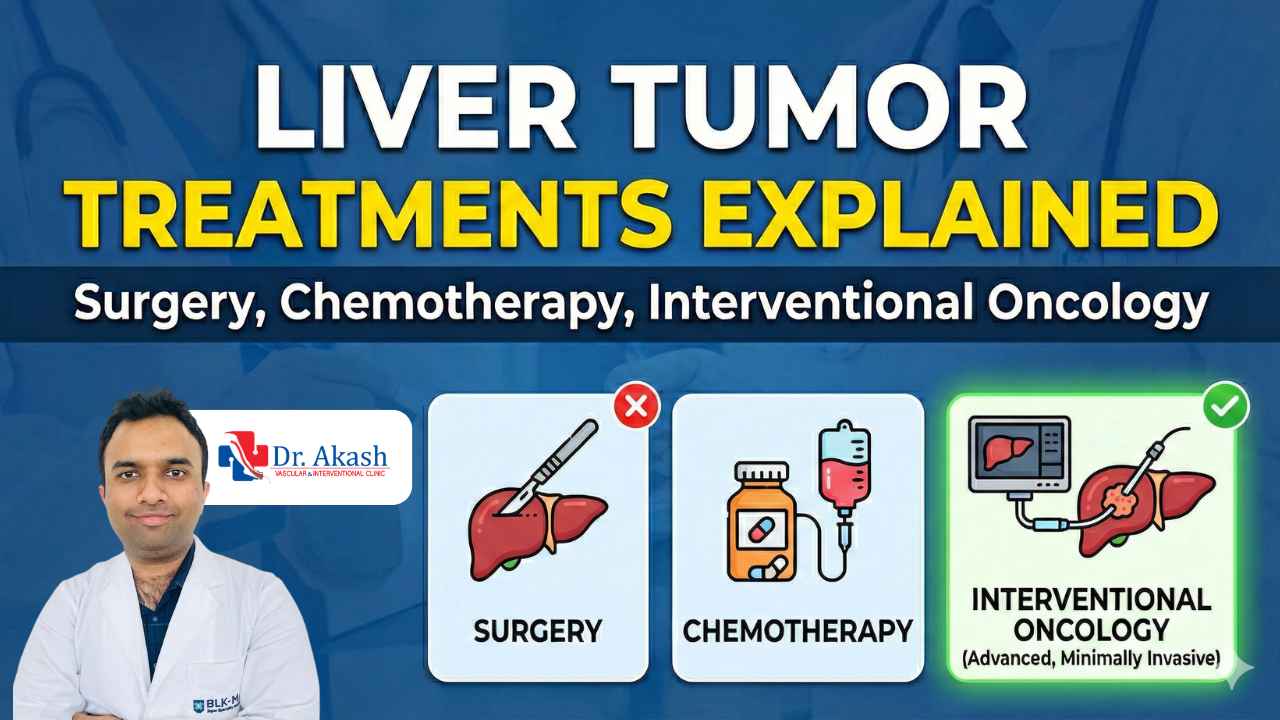
Liver Tumor Treatments Explained: Surgery, Chemotherapy, and Interventional Oncology

Liver Tumor Treatment in Delhi: Surgery, Chemotherapy, and Interventional Oncology | Dr. Akash Bansal

Liver Tumor Treatments Explained: Surgery, Chemotherapy, and Interventional Oncology

Hearing the words "liver tumor" can feel like your whole world has stopped. Whether you have just been diagnosed or are helping a loved one research their options, it is completely normal to feel overwhelmed. You likely have dozens of questions about what comes next. The most important thing to know right now is this: medical science has evolved incredibly fast, and you have more options today than ever before.

In the past, patients thought that risky open surgery was the only way to treat a liver mass. Today, a liver tumor treatment plan can involve a combination of therapies, many of which do not require a single surgical cut.

At Dr. Akash Bansal Vascular & Interventional Clinic, we believe that informed patients make the best decisions about their health. In this comprehensive guide, we will break down the different liver cancer treatment options, explaining everything in simple, everyday English. From traditional surgery to the latest breakthroughs in interventional oncology liver cancer care, here is everything you need to know.

Understanding Your Diagnosis: Types of Liver Tumors

Before discussing the treatments, it helps to understand what kind of tumor we are dealing with. Liver tumors are generally divided into benign (non-cancerous) and malignant (cancerous) growths.

1. Primary Liver Cancer: This is cancer that starts inside the liver. The most common type is Hepatocellular Carcinoma (HCC). Therefore, finding the right Hepatocellular carcinoma (HCC) treatment is a major focus for liver specialists. Another less common type starts in the bile ducts, requiring specific Cholangiocarcinoma treatment options.

2. Secondary Liver Cancer: Often, cancer starts in another part of the body (like the colon, breast, or lungs) and spreads to the liver. This is called liver metastasis. In these cases, liver metastasis treatment (Secondary liver cancer) focuses on controlling the spread and extending the patient's quality of life.

3. Benign Liver Tumors: Not all tumors are cancer. Some people develop non-cancerous growths. Finding the right benign liver tumor treatment is still important if the tumor grows large enough to cause pain. A common example is a hemangioma, and liver hemangioma treatment is often very straightforward and minimally invasive.

No matter the type, modern medicine offers various liver cancer modalities to manage the condition.

Traditional Surgical Options

When looking for a treatment for liver tumors, surgery is often the first thing that comes to mind. If a tumor is caught early and the rest of the liver is healthy, surgery can be highly effective.

Liver Resection Surgery

Also known as a hepatectomy for liver tumor, this procedure involves a surgeon physically cutting out the tumor along with a small margin of healthy tissue around it. Because the liver has an amazing ability to regenerate (grow back), removing a portion of it is possible. However, liver resection surgery is a major operation. It requires a hospital stay, a significant recovery period, and is only an option if the tumor is in a safe location to operate on.

Liver Transplant

In some cases where the liver is severely damaged by cirrhosis or there are multiple small tumors, a liver transplant for liver cancer might be considered. This involves removing the entire diseased liver and replacing it with a healthy liver from a donor. While it can be a cure, the waiting list for donor organs is long, and the surgery itself is highly complex.

Systemic Treatments: Chemotherapy and Targeted Therapy

If surgery is not an option—perhaps because the tumors are too large, there are too many of them, or they have spread to other organs—doctors often turn to systemic medications. "Systemic" means the medicine travels through your entire bloodstream to fight cancer cells everywhere.

Chemotherapy

Traditional chemotherapy for liver cancer uses strong drugs to kill fast-growing cancer cells. While it can slow down the disease, standard chemotherapy injected into a vein is sometimes less effective for primary liver cancer than it is for other cancers, and it often comes with tough side effects like nausea and fatigue.

Targeted and Systemic Therapy

Medical advancements have brought us targeted therapy liver cancer drugs. Instead of attacking all fast-growing cells, these drugs target specific weaknesses in the cancer cells themselves, stopping them from growing new blood vessels. This type of systemic therapy for HCC has become a vital part of comprehensive Hepatocellular carcinoma (HCC) modalities, offering hope to patients with advanced stages of the disease.

The Game Changer: Interventional Oncology

What if you could treat a liver tumor without making a large incision, without removing the organ, and without the harsh side effects of full-body chemotherapy? This is the promise of interventional oncology, a rapidly growing field of medicine.

An interventional radiologist is a highly specialized doctor who uses advanced imaging (like X-rays, ultrasounds, and CT scans) to see inside your body and guide tiny instruments to the exact site of the disease. This allows us to perform minimally invasive pinhole procedures that target the tumor directly from the inside.

At the vascular and interventional clinic, we focus heavily on non-surgical liver tumor treatment. These scarless procedures mean less pain, no large surgical wounds, and a much faster return to your normal life.

Here are the most effective minimally invasive options available today.

1. Image-Guided Tumor Ablation (Burning or Freezing the Tumor)
Ablation means to destroy. Image-guided liver tumor ablation involves inserting a needle-like probe directly through the skin into the liver tumor, guided by ultrasound or CT scans. Once inside the tumor, we destroy it.

  • Radiofrequency ablation (RFA) liver cancer: This technique uses electrical energy to heat the probe, essentially cooking and killing the cancer cells.
  • Microwave ablation (MWA) liver tumor: Similar to RFA, this uses electromagnetic waves (like your kitchen microwave) to create intense heat. MWA is often faster and can treat slightly larger tumors more effectively.

Ablation is a fantastic minimally invasive liver cancer treatment for patients with small tumors (<5 cm) with equivalent results to open surgery.

2. Embolization Techniques (Cutting off the Blood Supply)
Tumors are hungry. They need a constant supply of blood to grow. Embolization for liver cancer works by navigating a tiny tube (a catheter) through your blood vessels directly to the artery feeding the tumor. Once there, we block the blood supply, starving the tumor to death.

  • TACE procedure for liver cancer (Transarterial Chemoembolization): In this procedure, we deliver a high dose of chemotherapy directly inside the tumor. Immediately after, we block the blood vessel. This traps the chemotherapy inside the tumor where it is needed most, while preventing the toxic drugs from circulating through the rest of your body.
  • TARE procedure liver cancer (Transarterial Radioembolization / Y90): Instead of chemotherapy, TARE uses tiny glass or resin beads filled with radioactive isotopes (Yttrium-90). These radioactive beads lodge inside the tumor's blood vessels, delivering targeted radiation from the inside out, while sparing the healthy liver tissue around it.

These embolization techniques are highly effective for shrinking tumors and are a cornerstone of modern non-surgical liver cancer treatment in Delhi.

Why Choose Dr. Akash Bansal for Your Treatment?

If you are looking for an interventional radiologist near me, experience and precision are the most important factors. Dr. Akash Bansal is a leading interventional oncologist and a dedicated vascular specialist in delhi.

Our facility is recognized as a premier minimally invasive surgery clinic delhi, offering world-class care without the need for traditional open surgery. Whether you need a Liver ablation doctor in Delhi NCR or are specifically looking for the TACE procedure in Delhi, our team brings global expertise right to your doorstep.

Patients travel from all over to see our specialists. Whether you are looking for an interventional radiologist in noida, an interventional radiologist in gurgaon, or the Best interventional oncologist in Delhi, Dr. Akash Bansal interventional radiologist provides compassionate, cutting-edge care tailored to your exact anatomy. We are proud to be your trusted Interventional oncology clinic Delhi and a leading Liver tumor specialist in New Delhi.

Frequently Asked Questions (FAQs)

When dealing with a new diagnosis, it is natural to have many questions. Here are the answers to some of the most common questions our patients ask.

1. Can a liver tumor be cured without surgery?

Yes. For small tumors, especially those caught early, minimally invasive treatments like Microwave Ablation (MWA) or Radiofrequency Ablation (RFA) can completely destroy the tumor, offering a cure without the need for traditional open surgery.

2. What is the difference between TACE and TARE?

Both are embolization procedures that target the blood supply of the tumor using a catheter. The main difference is the "payload" they deliver. TACE (Transarterial Chemoembolization) delivers chemotherapy drugs directly into the tumor. TARE (Transarterial Radioembolization) delivers tiny radioactive beads to kill the tumor with targeted radiation.

3. How does microwave ablation work for liver cancer?

During Microwave Ablation (MWA), an interventional radiologist inserts a thin needle directly into the liver tumor through the skin. Electromagnetic waves are sent through the needle, creating intense heat that cooks and destroys the cancer cells instantly, while leaving the surrounding healthy liver tissue unharmed.

4. What is the recovery time for TACE procedure?

Because TACE is performed through a tiny pinhole (usually in the wrist or groin), recovery is very fast. Most patients stay in the hospital for just one night for observation and can return to their normal, light activities within just a few days. You may experience mild fatigue or a low-grade fever for a few days, which is perfectly normal.

5. Is liver ablation safe?

Yes, liver ablation is considered a very safe and highly effective procedure. Because it is guided by real-time imaging (like ultrasound or CT scans), the doctor has extreme precision. It carries a much lower risk of bleeding, infection, and complications compared to traditional open liver surgery.

6. When is chemotherapy used for liver tumors?

Traditional, full-body chemotherapy is generally used when liver cancer has spread to other parts of the body, or if the tumors cannot be treated with surgery or localized treatments like ablation and embolization. However, targeted chemotherapy delivered directly to the liver (like in the TACE procedure) is used very frequently with great success.

7. Who is a candidate for liver tumor embolization?

Embolization (like TACE or TARE) is usually recommended for patients who have tumors that are too large or too numerous to be treated with surgery or ablation, but where the cancer has not spread outside the liver. It is an excellent option for patients who want to shrink their tumors to relieve symptoms or to potentially qualify for a liver transplant later on.

Take the Next Step Toward Healing

A liver tumor diagnosis is a life-changing event, but it does not mean you are out of options. With the rise of interventional oncology, we can treat complex tumors using highly targeted, minimally invasive pinhole procedures that respect your body and speed up your recovery.

You don't have to face this alone. If you have been told surgery is your only option, or if you simply want to explore safer, non-surgical alternatives, we are here to help.

Contact Dr. Akash Bansal Vascular & Interventional Clinic today to schedule a comprehensive consultation. Let us help you find the safest and most effective treatment plan for your unique journey.
The Ultimate Guide to Prostate Artery Embolization: Treat Enlarged Prostate Without Surgery

The Ultimate Guide to Prostate Artery Embolization: Treat Enlarged Prostate Without Surgery | Dr. Akash Bansal

The Ultimate Guide to Prostate Artery Embolization: Treat Enlarged Prostate Without Surgery

Are you tired of waking up multiple times at night to use the bathroom? Do you struggle with a weak urine stream or the feeling that your bladder is never fully empty? If yes, you are likely suffering from Benign Prostatic Hyperplasia (BPH), commonly known as an enlarged prostate.

For years, men believed that risky open surgery was the only way out. Recently, urologists also treat this condition through a catheter in your urethra which can be uncomfortable. But today, medical science has evolved. At Dr. Akash Bansal Vascular & Interventional Clinic, we specialize in a revolutionary technique called Prostate Artery Embolization (PAE). This procedure allows you to Treat Enlarged Prostate Without Surgery, avoiding the risks of traditional operations.

In this ultimate guide, we will explore Non-surgical BPH treatment, how the PAE procedure works, and why it is rapidly becoming the preferred choice among enlarged prostate treatment options.

What is Prostate Artery Embolization (PAE)?

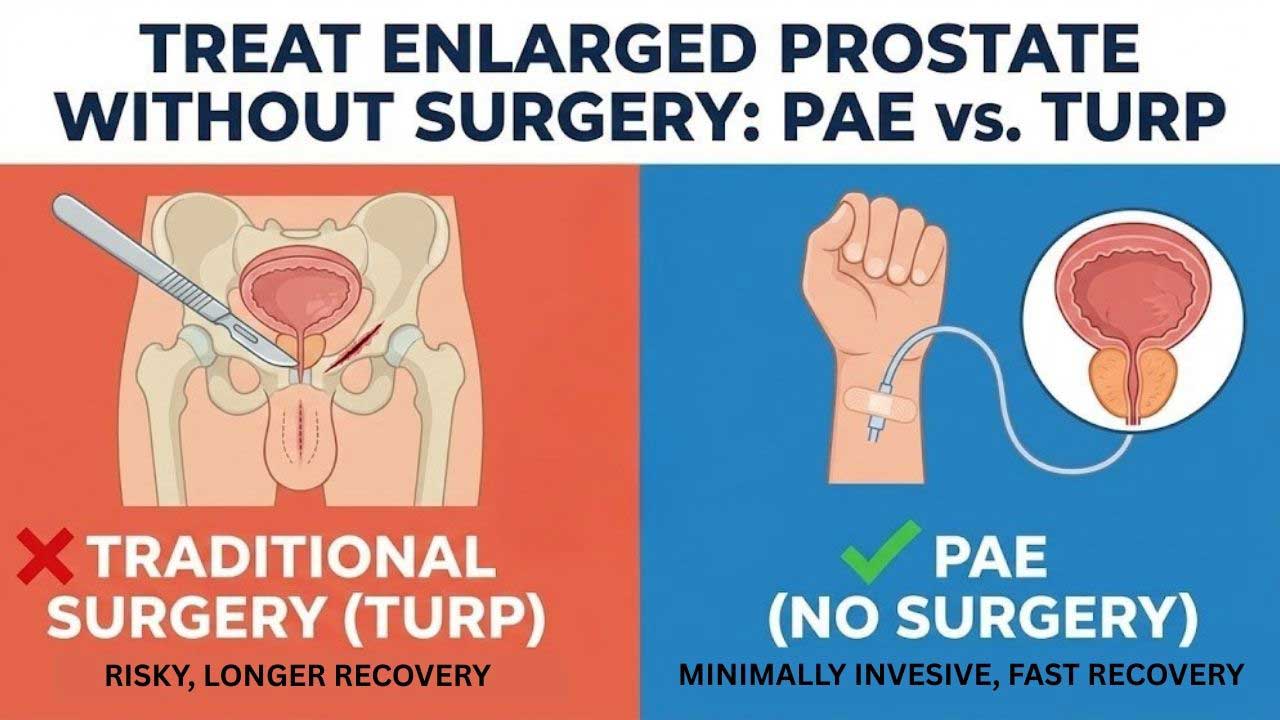
Prostate Artery Embolization is a minimally invasive treatment that shrinks the prostate by slowing down its blood supply. Unlike traditional surgery (TURP), which involves cutting or removing tissue, PAE is a Non-surgical BPH treatment performed through a tiny pinhole in the wrist or groin.

This procedure is performed by an interventional radiologist—a doctor specialized in image-guided, minimally invasive pinhole procedures—rather than a urologist. The goal is simple: starve the excess prostate tissue so it shrinks naturally, relieving the pressure on your urethra.

How Does the PAE Procedure Work?

The beauty of PAE lies in its simplicity and precision. Here is how we perform this minimally invasive prostate treatment at our clinic:

  • Pinhole Entry: We use Radial artery access (Pinhole) at the wrist or Femoral artery access at the groin. This means no cuts on your penis or abdomen.
  • Navigation: Using advanced X-ray imaging, a thin tube (catheter) is guided to the specific arteries feeding your prostate.
  • Embolization: We release tiny beads called Microspheres into these arteries. These beads block the blood flow to the swollen parts of the prostate.
  • Shrinking: Without blood, the prostate tissue softens and shrinks over the next few weeks.

This method effectively allows you to shrink prostate without surgery, resolving issues like bladder outlet obstruction and urinary retention.

PAE vs. TURP: Why Choose the Non-Surgical Route?

When looking for Alternatives to TURP surgery, PAE stands out for safety and comfort. Transurethral Resection of the Prostate (TURP) is the traditional surgical route, but it often comes with side effects like sexual dysfunction, bleeding, and long recovery times.

Here is why Prostate embolization benefits are superior for many men:

  • General Anesthesia free: The procedure is done under local anesthesia. You are awake but feel no pain.
  • No Sexual Side Effects: Unlike surgery, PAE does not cause retrograde ejaculation or impotence.
  • Scarless procedures: There is no cutting involved.
  • Faster Recovery: Most patients go home the same day.

Understanding the difference between a Urologist vs Interventional Radiologist is key here. While urologists specialize in surgery, an interventional radiologist in Delhi like Dr. Akash Bansal specializes in treating the condition from the inside out using vascular systems.

Who is the Right Candidate?

You might be a good candidate for this Benign Prostatic Hyperplasia (BPH) cure if:

  • You have a significantly enlarged prostate.
  • Medicines are no longer working for you.
  • You want to avoid the risks of surgery.
  • You currently have a catheter due to urine blockage and want to be free of it.

If you are looking for a vascular specialist in Delhi or a minimally invasive surgery clinic Delhi, our team can evaluate if PAE is right for you.

Why Choose Dr. Akash Bansal Vascular & Interventional Clinic?

When it comes to advanced vascular care, experience matters. As a leading interventional oncologist and interventional radiologist, Dr. Akash Bansal is a pioneer in performing Prostate Artery Embolization in Delhi.

Whether you are searching for an interventional radiologist near me, an interventional radiologist in Noida, or an interventional radiologist in Gurgaon, our center in New Delhi serves patients from across the NCR region. We are proud to be recognized as the home of the Best Interventional Radiologist in Delhi, offering compassionate, high-tech care.

We understand that cost is a factor. We strive to make the PAE treatment cost in Delhi affordable compared to the long-term costs of surgical complications and hospital stays.

Frequently Asked Questions (FAQs)

1. Can enlarged prostate be cured without operation?

Yes. Prostate Artery Embolization is a proven medical procedure that treats the root cause of the enlargement by reducing blood flow, effectively acting as a cure for symptoms without any surgical operation.

2. Is Prostate Artery Embolization safe?

Yes, PAE is considered very safe. Since it is a minimally invasive prostate treatment, the risks of severe bleeding, infection, or sexual side effects are significantly lower compared to open surgery or TURP.

3. What is the recovery time for PAE?

Recovery is rapid. Most patients are discharged on the same day or the next morning. You can usually return to light activities within 2-3 days and full work within a week.

4. Does PAE affect sexual function?

No. This is one of the biggest Prostate embolization benefits. Unlike TURP, which can cause retrograde ejaculation (dry orgasm) or erectile dysfunction, PAE preserves your sexual function completely.

5. PAE vs TURP: Which is better?

If you prioritize a faster recovery, no hospital stay, and preserving sexual health, PAE is often the better choice. If the prostate is extremely large or cancerous, surgery might be required. Dr. Akash Bansal’s prostate treatment plans are customized to your specific anatomy.

6. What is the success rate of Prostate Artery Embolization?

The technical success rate is over 95%. Most men report significant improvement in urine flow and a reduction in nightly bathroom visits within the first month.

7. Who is the Best doctor for enlarged prostate in India?

Dr. Akash Bansal is widely considered one of the top experts for Non-surgical prostate treatment in Delhi NCR. His focus on Interventional Radiology for prostate ensures precision and safety.

Take the Next Step Toward Relief

Don't let an enlarged prostate control your life. You have options beyond medication and surgery. Choose the vascular and interventional clinic that prioritizes your comfort and dignity.

Contact Us Today: Dr. Akash Bansal Vascular & Interventional Clinic

The Ultimate Guide to Uterine Fibroids Treatment: Is Surgery Your Only Option?

Uterine Fibroids Treatment: Is Surgery Your Only Option? | Dr. Akash Bansal

The Ultimate Guide to Uterine Fibroids: Is Surgery Your Only Option?

If you have recently been diagnosed with fibroids, you are probably feeling overwhelmed. You might be dealing with painful periods, a feeling of heaviness, or the fear that a major surgery—like removing your uterus—is inevitable.

But here is the truth that many patients aren't told immediately: Surgery is not your only option.

At Dr. Akash Bansal Vascular & Interventional Clinic, we believe in empowering women with choices. Today, medicine has advanced beyond the scalpel. We are moving away from "maximum invasion" to "maximum precision."

In this guide, we will break down everything you need to know about Uterine Fibroids treatment, helping you understand your body and how you can get relief without a single surgical cut.

What Are Uterine Fibroids?

Before we talk about Uterine Fibroids treatment, let’s understand what we are dealing with. Uterine fibroids are non-cancerous growths of the uterus that often appear during childbearing years. They aren't usually dangerous in terms of cancer, but they can make life miserable.

Uterus Fibroids Causes: Why Me?

Many women ask us, "What did I do wrong?" The answer is: Nothing.

While the exact uterus fibroids causes aren't crystal clear, we know that hormones (estrogen and progesterone) and genetics play a huge role. If your mother or sister had them, you might too. They are incredibly common, but that doesn't mean you have to live with the pain.

Signs You Can’t Ignore: Fibroid Symptoms and Treatment

How do you know if you need Uterine Fibroids treatment? Some women have no symptoms, but for others, the signs are disruptive.

Common symptoms include:

  • Heavy Bleeding with Clots: This is the most common red flag. If you are changing pads every hour or passing large clots, this is not "normal."
  • Pelvic Pain and Pressure: A constant feeling of heaviness in the lower belly.
  • Frequent Urination: The fibroid might be pressing on your bladder.
  • Bulky Uterus: You might hear your doctor say you need Bulky Uterus treatment. This just means the fibroids have enlarged your uterus, sometimes making you look pregnant when you aren't.

If you are facing these issues, finding the right Uterine Fibroids treatment is essential to getting your life back.

The Old Way vs. The New Way: Is Surgery Necessary?

For decades, the standard Uterine Fibroids treatment was a Hysterectomy (removing the uterus) or Myomectomy (cutting out the fibroids). While these surgeries are effective, they come with long recovery times, scars, and the loss of the uterus.

But today, you can choose Fibroid treatment without surgery.

Enter the Interventional Radiologist

An interventional radiologist is a doctor who specializes in minimally invasive treatments. Instead of opening the body up, we use imaging (like X-rays and Ultrasound) to look inside and treat the problem through a tiny pinhole.

As a leading interventional radiologist in Delhi, Dr. Akash Bansal specializes in saving the uterus while treating the fibroids effectively.

The Non-Surgical Solutions: UFE & Microwave Ablation

If you are looking for effective Uterine Fibroids treatment that doesn't involve stitches, major cuts, or long hospital stays, we offer two gold-standard technologies at Dr. Akash Bansal Vascular & Interventional Clinic.

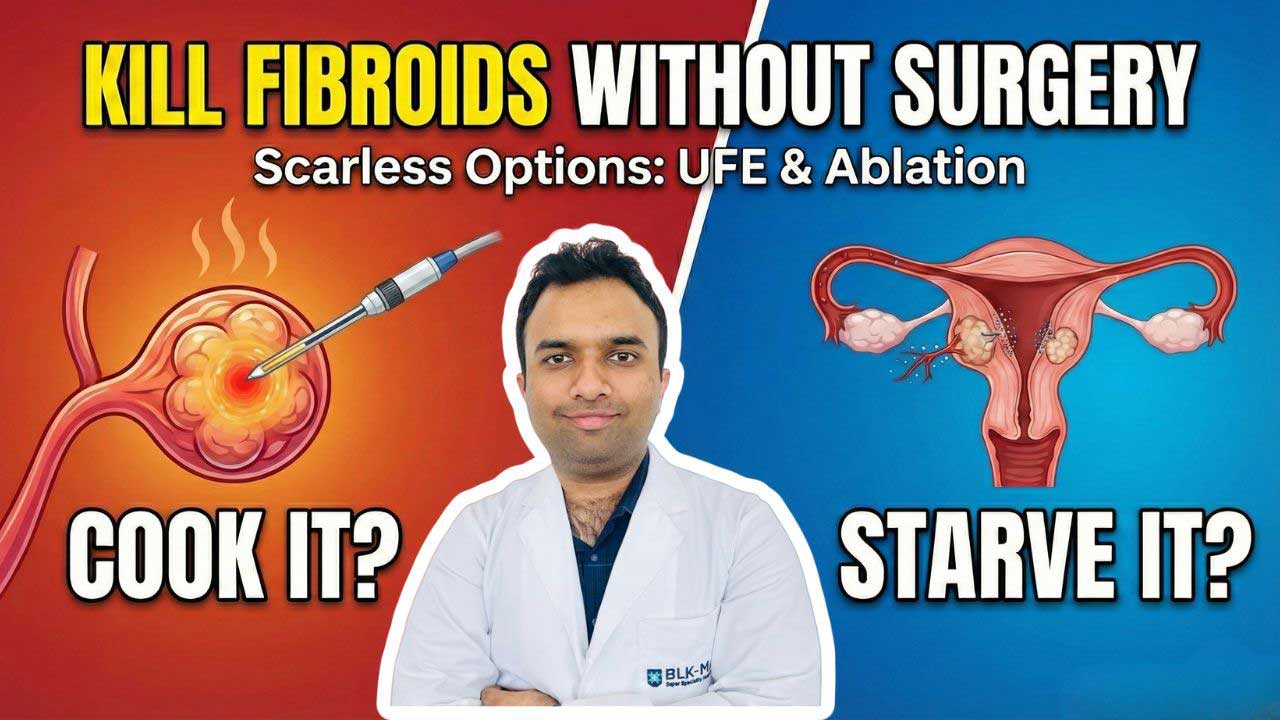
We don't just "cut it out"; we use science to either "starve" the fibroid or "shrink" it with heat. Here are your two scarless options:

Option 1: Uterine Fibroid Embolization (UFE/UAE) – "Starving the Fibroid"

This is the most popular non-surgical fibroid treatment in India for women who want to keep their uterus.

How Does It Work? Think of a fibroid like a plant, and your blood vessels like a garden hose feeding it.

  1. We make a tiny prick (pinhole) in the wrist or groin.
  2. We guide a thin tube (catheter) to the artery specifically feeding the fibroid.
  3. We release tiny particles to block that blood supply.

Without blood, the fibroids starve, shrink, and die. The symptoms fade away, but your uterus remains healthy and intact.

Option 2: Microwave Ablation – "Cooking the Fibroid"

This is a highly advanced technique where we destroy the fibroid directly using thermal energy (heat).

How Does It Work? Instead of cutting the tummy, we guide a special thin needle directly into the center of the fibroid under ultrasound guidance.

  1. The needle tip emits microwave energy, creating precise heat.
  2. This heat "cooks" or destroys the fibroid tissue from the inside out.
  3. The body then naturally absorbs the treated tissue over time.

This is a scarless procedure that is incredibly precise, ensuring only the fibroid is targeted while the surrounding healthy uterus is left untouched.

Which Option is Best for You? (UFE vs. Ablation)

Patients often ask, "Doctor, which one should I choose?" As an expert interventional radiologist in Delhi, Dr. Akash Bansal selects the right treatment based on your specific scan. Here is the general rule of thumb we use to decide:

1. For Multiple Fibroids → We Choose UFE

If you have a "Bulky Uterus" with many fibroids scattered throughout, Uterine Fibroid Embolization (UFE) is usually the better choice.

  • Why? UFE treats the entire uterus at once. It cuts off the blood supply to all fibroids simultaneously, whether you have 3 or 30. You don't need to target them one by one.

2. For a Single (or Few) Large Fibroids → We May Choose Ablation

If you have just one or two isolated fibroids that are causing pain or pressure, Microwave Ablation might be superior.

  • Why? It allows us to target that specific problem area with extreme precision. We destroy the troublesome lump without affecting the blood flow to the rest of the uterus.

Shared Benefits of Both:

  • No Cuts on Your Abdomen: Both are pinhole procedures.
  • Faster Recovery: Most patients go home the same day or the next day.
  • Avoid Uterus Removal Surgery: You keep your organs and your womanhood.

Why Choose Dr. Akash Bansal Vascular & Interventional Clinic?

When it comes to your health, experience matters. If you are searching for an interventional radiologist near me or a vascular specialist in Delhi, you want someone who understands both the vascular system and women's health.

Dr. Akash Bansal is a renowned interventional oncologist and radiologist who advocates for minimally invasive pinhole procedures. Whether you are looking for an interventional radiologist in Noida, an interventional radiologist in Gurgaon, or the best fibroid doctor in Delhi, our clinic in New Delhi serves patients from across the NCR region with world-class care.

We understand that the fibroid removal surgery cost can be a worry. However, UFE is often cost-effective compared to major surgery when you factor in the shorter hospital stay and quicker return to work.

Frequently Asked Questions (FAQs)

1. Can fibroids be treated without operation?

Yes! Uterine Fibroids treatment has evolved. Uterine Fibroid Embolization (UFE) is a proven method to treat fibroids without any cutting or open operation. It cuts off the blood supply to the fibroids, causing them to shrink.

2. Is UFE better than Myomectomy?

For many women, yes. Myomectomy is a major surgery to cut out fibroids, which leaves scars and has a longer recovery. UFE is a scarless fibroid treatment with a much faster recovery time. It treats all fibroids at once, whereas surgery might miss smaller ones that grow back later.

3. How to shrink fibroids without surgery?

The most effective medical way to shrink fibroids is through Uterine Artery Embolization (UAE). By blocking the blood flow, the fibroids are starved of nutrients and shrink over time, resolving symptoms like pain and heavy bleeding with clots.

4. What is the best treatment for multiple fibroids?

If you have multiple fibroids, surgery can be difficult and bloody. Uterine Fibroids treatment via Embolization (UFE) is excellent for multiple fibroids because it targets the blood supply of the entire uterus, treating all fibroids simultaneously regardless of their number.

5. What is the recovery time after fibroid embolization?

Recovery is very fast. Most patients are discharged within 24 hours. You can usually return to light activities in 2-3 days and full work within a week. This is much faster than the 4-6 weeks required for a hysterectomy.

Take the Next Step

Don't let fibroids control your life. If you have been told surgery is your only choice, get a second opinion. Uterine Fibroids treatment doesn't have to be scary or invasive.

Explore alternatives to hysterectomy at our minimally invasive surgery clinic Delhi.

Contact Us Today: Dr. Akash Bansal Vascular & Interventional Clinic

📍 Ground Floor, BLK MAX Superspeciality Hospital, Pusa Rd, Rajendra Place, New Delhi

📞 Call/WhatsApp: +91-9560658828

🌐 Website: www.drakashintervention.com

Choose the path of precision. Choose scarless healing.

Interventional Oncology – The 4th Pillar of Cancer Care

Beyond Chemo and Surgery: Interventional Oncology – The 4th Pillar of Cancer Care

When you or a loved one hears the word “cancer,” the mind usually jumps to the three traditional pillars of treatment:

  1. Medical Oncology: Treating cancer with drugs (Chemotherapy, Immunotherapy).
  2. Surgical Oncology: cutting out the tumor in an operating room.
  3. Radiation Oncology: Using high-energy beams to kill cancer cells.

For decades, these were the only options. We imagine big operating rooms, long cuts, hair loss, and painful recoveries. But medicine has changed.

There is now a fourth pillar of cancer care that many patients don’t know about until it’s too late. It is quiet, precise, and it doesn’t leave major scars on your body.

This is the world of Interventional Oncology.

If you have been searching for a safer way to tackle a diagnosis, or if you are looking for an interventional radiologist in Delhi, this guide is crucially important. We are going to break down exactly what these doctors do and how they use minimally invasive pinhole procedures to support patients at every single stage of their cancer journey.

Who is the Doctor Behind the Mask?

First, let’s clear up the titles. You might search for an interventional radiologist near me, but then hear the term “Interventional Oncologist.” Are they different?

Think of it like this: An interventional radiologist is a doctor who masters high-tech cameras—like X-rays, CT scans, and ultrasounds—to see inside your body in real-time. They don’t guess; they look at a live screen to navigate your blood vessels and organs.

An interventional oncologist is the specialist version of that doctor, focused solely on cancer. They are the “snipers” of the medical world. Instead of opening the whole body to find a problem (like a traditional surgeon might), they use their imaging tools to guide tiny needles and wires through a pinhole directly to the tumor.

Expert doctors like Dr. Akash Bansal have spent years mastering these techniques, combining the knowledge of a cancer doctor with highly specialized technical skills.

The 4 Stages of Cancer Care: How an Interventional Oncologist Helps

Many people think interventional oncology is just a last resort. That is incorrect. These specialists play a vital role across the entire lifecycle of cancer care: Initial Diagnosis, Management, Treatment, and Post-Treatment Care.

Here is how they help at every step using scarless procedures.

Stage 1: The Initial Stage (Accurate Diagnosis)

Before you can treat cancer, you need to know exactly what it is. You cannot rely on guesswork.

An interventional oncologist performs minimally invasive biopsies. Using Ultrasound (USG) or CT guidance, they guide a thin needle precisely into the suspicious lump to take a sample (FNAC or Biopsy). Because they can “see” the tumor on the screen, the accuracy is incredibly high. This ensures you get a correct molecular diagnosis, which determines your entire treatment plan.

Stage 2: The Management Stage (Handling Complications)

During cancer treatment, the disease itself or the side effects of chemotherapy can cause serious complications. This is where an interventional oncologist improves your quality of life significantly.

  1. Managing Fluid Buildup: Sometimes water collects in the lungs (pleural effusion) or abdomen (ascites), causing severe breathlessness and bloating. Instead of temporary tapping that requires repeated hospital visits, an interventional radiologist can place a special tube, like a PleurX catheter. This can stay in the body for 6-9 months, allowing patients to drain fluid at home easily without constant hospital trips.
  2. Clearing Blockages: If a tumor blocks the liver’s bile ducts, bilirubin increases, causing jaundice. An interventional oncologist performs PTBD (Percutaneous Transhepatic Biliary Drainage) to drain the bile and relieve jaundice. Similarly, if a tumor blocks the kidney, they perform a PCN (Percutaneous Nephrostomy) to save the kidney from damage.
  3. Painless Chemotherapy Access: Chemotherapy requires frequent IV access. Getting poked with a cannula again and again is painful and damages veins. An interventional oncologist provides long-term solutions like a PICC line or a Chemo Port. These are placed once through a tiny hole and can be used for months or years for painless chemo delivery and blood tests.

Stage 3: The Treatment Stage (Attacking the Tumor)

This is where the science gets really cool. For tumors in the Liver, Kidney, Lungs, and Bones, interventional oncology offers direct treatments, often used when surgery isn’t possible due to the tumor’s size or location.

We use two main methods: Cooking/Freezing it or Starving/Poisoning it.

  1. Ablation (Using Temperature) The doctor guides a special needle directly into the tumor through a pinhole.
  •     Radiofrequency (RFA) or Microwave Ablation: The needle gets intensely hot, “cooking” the tumor cells until they are destroyed.
  • Cryoablation: The opposite happens. The needle gets incredibly cold, freezing the tumor into an ice ball. This is excellent for preserving healthy tissue right next to the tumor.
  1. TACE & TARE (Embolization) Tumors need blood to grow. In these procedures, the doctor navigates a thin tube (catheter) through the artery at the wrist or groin right up to the specific artery feeding the tumor.
  •     TACE (Transarterial Chemoembolization): We deliver a high dose of chemotherapy directly into the tumor’s artery and then block the artery.

○      Benefit 1: The tumor gets a massive concentration of medicine.

○      Benefit 2: Because the medicine is trapped in the tumor, the rest of the body experiences very few side effects (like hair loss or nausea).

  • TARE (Transarterial Radioembolization): Similar to TACE, but instead of chemo, we inject microscopic radioactive beads into the tumor’s artery. This delivers incredible radiation doses only to the cancer, sparing the healthy liver surrounding it.

Note: We also perform procedures to stop bleeding before major surgery (pre-operative embolization) or to grow the healthy part of a liver before surgery (Portal Vein Embolization).

Stage 4: Post-Treatment Care

Even after primary treatment (like major surgery, chemo, or radiation), complications can arise. Interventional radiologists are experts at managing post-surgical issues like internal bleeding, which require embolizations, or deep infections, that require precise drainage without opening the patient up again.

Why Choose a Vascular and Interventional Clinic?

Choosing a vascular and interventional clinic means choosing a path that prioritizes your recovery. Patients in Delhi and NCR opt for these treatments because:

  •     Faster Recovery: Many procedures are daycare or require only a 1-day stay, compared to weeks in bed after surgery.
  •     Local Anesthesia: Most procedures are done without general anesthesia. You are awake but numb, which is much safer, especially for older patients.
  • Repeatable: If a tumor comes back, these procedures can often be repeated easily.

Where Can You Find These Treatments?

If you are in the capital, finding an expert interventional radiologist in Delhi is your first step.

Expert care is now accessible across the National Capital Region (NCR).

  • For patients near the corporate hubs, finding an interventional radiologist in Noida or an interventional radiologist in Gurgaon is easier than ever, with top hospitals offering these advanced cath-lab procedures.

However, the key is finding a specialist who understands both the vascular system and cancer biology. That is why seeing a renowned specialist like Dr. Akash Bansal makes a difference. He bridges the gap between diagnosis and advanced, minimally invasive treatment.

The Future is Here

Medicine is moving away from “maximum invasion” to “maximum precision.” The days where bigger surgery always meant better results are fading. Today, it is about being smart.

An interventional oncologist is the leader of this new wave—the fourth pillar of cancer care—using technology to target the problem without hurting the patient.

Take the Next Step

A cancer diagnosis is overwhelming. But knowing you have four pillars of support, not just three, gives you more options.

If you are looking for a vascular specialist in Delhi for a port placement, or need a second opinion on tumor treatment, reach out to an expert. Dr. Akash Bansal and his team are dedicated to patient education across the 4 stages of cancer care.

Don’t just rely on the scalpel. Explore the world of scarless procedures.

Are you ready to discuss the fourth pillar of cancer treatment? Contact Dr. Akash Bansal today at his vascular and interventional clinic. Let’s fight cancer with precision.

Disclaimer: This blog is for informational purposes only and does not constitute medical advice. Always consult with a qualified specialist for your specific medical needs.


The Thyroid Nodule Solution: How a Pinhole Procedure Can Avoid Neck Surgery

Introduction: More Than Just a Lump in Your Throat

You’re getting ready for the day, maybe adjusting your collar or putting on a necklace, when your fingers brush against it—a small, firm lump on the front of your neck. Your heart skips a beat. Or perhaps you’ve known about it for a while, a quiet passenger you feel every time you swallow. This is a thyroid nodule, and if you’re reading this, you’re likely wondering: What now? Does this mean surgery? Will I have a scar?

For decades, the answer to a troublesome thyroid nodule was almost always surgery. The thought alone can be frightening: a large incision across the base of your neck, general anesthesia, a hospital stay, a visible scar, and a long recovery. It’s a daunting prospect, one that makes many people delay treatment or live with discomfort and worry.

But what if you had another choice? What if modern medicine had evolved a gentler, smarter way? This blog is about that very solution—a revolutionary approach that treats the problem from the inside, leaving no external marks and getting you back to your life in no time. We’ll walk through what thyroid nodules are, why the old fears about surgery may no longer apply to you, and introduce you to the world of minimally invasive pinhole procedures.

Part 1: Understanding Your Thyroid – The Body’s Silent Conductor

First, let’s talk about the thyroid itself. Don’t worry; we’ll keep it simple.

Think of your thyroid gland as your body’s thermostat and metabolism manager. It’s a small, butterfly-shaped gland that sits at the base of your neck, just below your Adam’s apple. Its job is to produce hormones that regulate vital functions—how fast your heart beats, how quickly you burn calories, your body temperature, and even your mood. When it’s working well, you don’t even notice it. But sometimes, lumps can form within it.

What is a Thyroid Nodule?

A thyroid nodule is simply a growth or lump that forms within the thyroid gland. Imagine a small, round balloon growing inside the soft tissue. Most nodules are benign (not cancerous), but they can cause problems simply by their presence.

Why do they form? Sometimes it’s due to an iodine deficiency, sometimes it’s genetic, and often, the cause isn’t entirely clear. The important thing to know is that they are very common. Many people have them and don’t even know it until they show up on a scan for something else.

When a Nodule Becomes a Problem

A nodule isn’t always just a harmless lump. It may need attention if:

  •       It’s growing large enough to be seen or felt, causing a visible bulge in your neck.
  •       It presses on your windpipe or esophagus, making it difficult to breathe or swallow—a sensation often described as having something stuck in your throat.
  •       It becomes overactive, producing too much thyroid hormone and leading to symptoms like weight loss, anxiety, rapid heartbeat, and tremors.
  •       There’s any concern, however small, about cancer. While most are benign, this fear is often the biggest reason people seek treatment.

Traditionally, if a nodule caused these issues, the only definitive solution offered was a surgery called a thyroidectomy—removing part or all of the thyroid gland.

Part 2: The Old Way – Why the Fear of Surgery is Real

Let’s be honest about traditional thyroid surgery. The fear associated with it is completely valid. For a patient, it often involves:

  1. A Large, Visible Scar: The incision is made across the lower front of the neck. While surgeons try to place it in a natural crease, it often results in a permanent, visible line.
  2.     General Anesthesia: Being put completely to sleep, which carries its own set of risks and requires longer hospital monitoring.
  3.     A Hospital Stay: Typically 1-3 days in the hospital post-surgery.
  4.     A Painful Recovery: The neck is a sensitive area full of muscles used for every movement. Recovery can involve significant pain, stiffness, and a period of vocal hoarseness.
  5.     Potential for Lifelong Medication: If the entire thyroid is removed, you will need to take thyroid hormone replacement pills every day for the rest of your life.

It’s a significant physical and emotional ordeal. This is why, as an interventional radiologist in Delhi, I see many patients who have been suffering for years, simply because they are terrified of this surgical path.

Part 3: The Modern Solution – A Pinhole, Not a Scar

Now, imagine a different scenario. What if the problematic nodule could be treated through a tiny pinprick in your skin, no larger than the tip of a pen? What if you could be awake during the procedure, go home the same day, and have no visible scar to show for it?

This isn’t science fiction. This is the reality of minimally invasive pinhole procedures, specifically Thyroid Ablation.

What is Thyroid Ablation?

The word “ablate” simply means “to remove or destroy.” Thyroid ablation uses energy—most commonly Radiofrequency (RFA) or Microwave (MWA)—to carefully heat and destroy the nodule tissue from the inside, while preserving the healthy, functioning part of your thyroid gland.

Think of it like using a precision microwave to cook and shrink just the unwanted part of the gland, leaving everything else perfectly intact.

How Does It Work? A Step-by-Step, Simple Explanation

  1. Guidance is Key: Using a live ultrasound machine, we can see the exact location, size, and shape of your nodule on a screen in real-time.
  2.     The “Pinhole” Entry: After numbing the skin with a local anesthetic (like a dentist does), we gently insert a very thin probe (about the size of a large needle) through the skin of your neck. This is the only point of entry.
  3.     Precision Treatment: Watching carefully on the ultrasound screen, we guide the tip of the probe directly into the center of the nodule. Then, we deliver a controlled amount of thermal energy (heat). This heat destroys the nodule cells.
  4.     The Body Takes Over: Over the following weeks and months, your body’s natural healing system recognizes the treated tissue as “damaged” and slowly breaks it down and absorbs it. The nodule shrinks away, relieving pressure and symptoms.

The Life-Changing Benefits: Why This is a Game-Changer

When you choose a scarless procedure like thyroid ablation at a vascular and interventional clinic, you are choosing a path with remarkable advantages:

  •       No Neck Scar: This is often the most important benefit for patients. The entry point is so tiny it becomes virtually invisible. You can wear your favorite necklaces and clothes without a reminder.
  •       Preserves Your Thyroid: We target only the nodule. The healthy thyroid tissue is spared, so your gland can continue to function normally. This means a high chance of avoiding lifelong thyroid medication.
  •       No General Anesthesia: You are awake during the procedure, sedated just enough to be comfortable and relaxed. This eliminates the risks associated with being put fully to sleep.
  •       Outpatient, Same-Day Procedure: You walk into our minimally invasive surgery clinic in Delhi and walk out the same day, usually within a few hours. No overnight hospital stays.
  •       Exceptionally Fast Recovery: Since there are no muscle cuts, recovery is swift. Most people return to their normal routine, including office work, within 1-2 days. There’s minimal pain, often described as a mild sore throat.
  •       Highly Effective: For benign nodules causing symptoms, the success rate in reducing size and relieving problems like difficulty swallowing is over 90%.

Part 4: Who is This For? Is This Procedure Right For You?

Thyroid ablation is a powerful tool, but it’s not for every single thyroid condition. It is an excellent option if:

  •       You have a benign thyroid nodule that is causing symptoms (pressure, swallowing issues, cosmetic concern).
  •       You have an overactive “hot” nodule causing hyperthyroidism.
  •       You have a nodule that is growing over time and causing worry.
  •       You are at high surgical risk due to other health conditions.
  •       You simply wish to avoid a neck scar and the ordeal of traditional surgery.

The first step is always a proper evaluation. This involves an ultrasound and always a fine-needle aspiration (FNA) biopsy—a simple needle test—to confirm the nodule is benign. This treatment is not suitable for cancerous nodules. FNA differentiates whether the nodule is benign or cancerous. This is where consulting the right specialist is crucial.

Part 5: Why Your Choice of Doctor Matters – The Interventional Radiologist

You may be asking, “Which type of doctor performs this?” The answer is a specialist you may not have heard of before: an interventional radiologist.

  •       What is an Interventional Radiologist? We are doctors who use medical imaging (like X-ray, ultrasound, and CT scans) as our eyes to guide tiny instruments through the body. We are experts in navigating the body’s pathways to treat problems without making large surgical cuts.
  •       We are Pioneers of “Pinhole” Medicine. Procedures like thyroid ablation were developed and perfected in the field of Interventional Radiology. Our entire training is based on the principle of maximum effect with minimal invasion.
  •       A Different Kind of Consultation. When you see an interventional radiologist in Delhi like myself, Dr. Akash Bansal, the conversation is different. We look at your ultrasound images with you, explain exactly what we see, and discuss if a minimally invasive approach is your best path forward. Also we are the ones who perform the FNA procedure to differentiate benign from malignant nodules, so the entire spectrum of the disease is handled by us. We are part of your diagnostic and treatment team, focused on preserving your body’s natural function.

Whether you are searching for an interventional radiologist near me, an interventional radiologist in Noida, or an interventional radiologist in Gurgaon, seeking out this specific expertise ensures you are exploring all your modern treatment options.

Conclusion: You Have a Choice

A thyroid nodule diagnosis doesn’t have to lead down a single, scary road toward major surgery. Medical science has advanced, offering a compassionate, intelligent, and highly effective alternative.

You have the right to a treatment that respects your body, your appearance, and your time.

At my practice, we believe in providing this choice. We understand the anxiety that comes with a neck lump—the fear of cancer, the dread of surgery, the worry about a scar. Our goal is to replace that fear with clear information and genuine hope.

If you or someone you love is struggling with a thyroid nodule, I invite you to take a new kind of first step. Reach out for a consultation. Let’s look at your scans together and see if you are a candidate for a scarless procedure that can help you avoid neck surgery forever.

Your journey to a solution can be quieter, gentler, and far more comfortable than you ever imagined.

Take the first step towards a scar-free solution today.

Disclaimer: This blog is intended for informational purposes only and does not constitute medical advice. Please consult with a qualified healthcare professional like an interventional radiologist or endocrinologist for an accurate diagnosis and personalized treatment plan.

Varicose Veins Aren’t Just Cosmetic: Signs You Should See a Vascular Specialist

You’ve probably seen them – those twisted, bulging, blue or purple veins on someone’s legs. Maybe you even have them yourself. For a long time, varicose veins have been brushed off as a mere cosmetic issue, something to be hidden under long pants or ignored.

But what if we told you that these veins are more than just a surface-level concern? What if they are your body’s way of sending a signal—a signal that something deeper is going on with your circulation?

Ignoring this signal can mean missing out on a chance to improve not just how your legs look, but how they feel every single day. This isn’t just about vanity; it’s about vitality. Let’s break down what varicose veins really mean and when it’s time to stop hiding them and start getting them treated by an expert.

What Are Varicose Veins, Really?

Think of your circulatory system as a complex network of roads. Your arteries are the highways carrying oxygen-rich blood from your heart to the rest of your body. Your veins are the return routes, bringing the blood back to your heart and lungs for a refill.

Now, imagine tiny, one-way valves inside these veins. Their job is to make sure the blood keeps moving uphill from your legs back to your heart, against gravity. Varicose veins happen when these tiny valves become weak or damaged.

When the valves don’t work properly, blood starts to pool in the veins. This causes them to stretch, bulge, and twist—becoming the varicose veins you see on the surface. They are a sign of a underlying condition called venous insufficiency, which simply means your veins are having a hard time sending blood back to the heart.

Beyond the Surface: The “Not-So-Pretty” Symptoms You Shouldn’t Ignore

While the appearance is what most people notice first, the physical sensations are often what affect their quality of life the most. If you are experiencing any of the following, your varicose veins are trying to tell you something important:

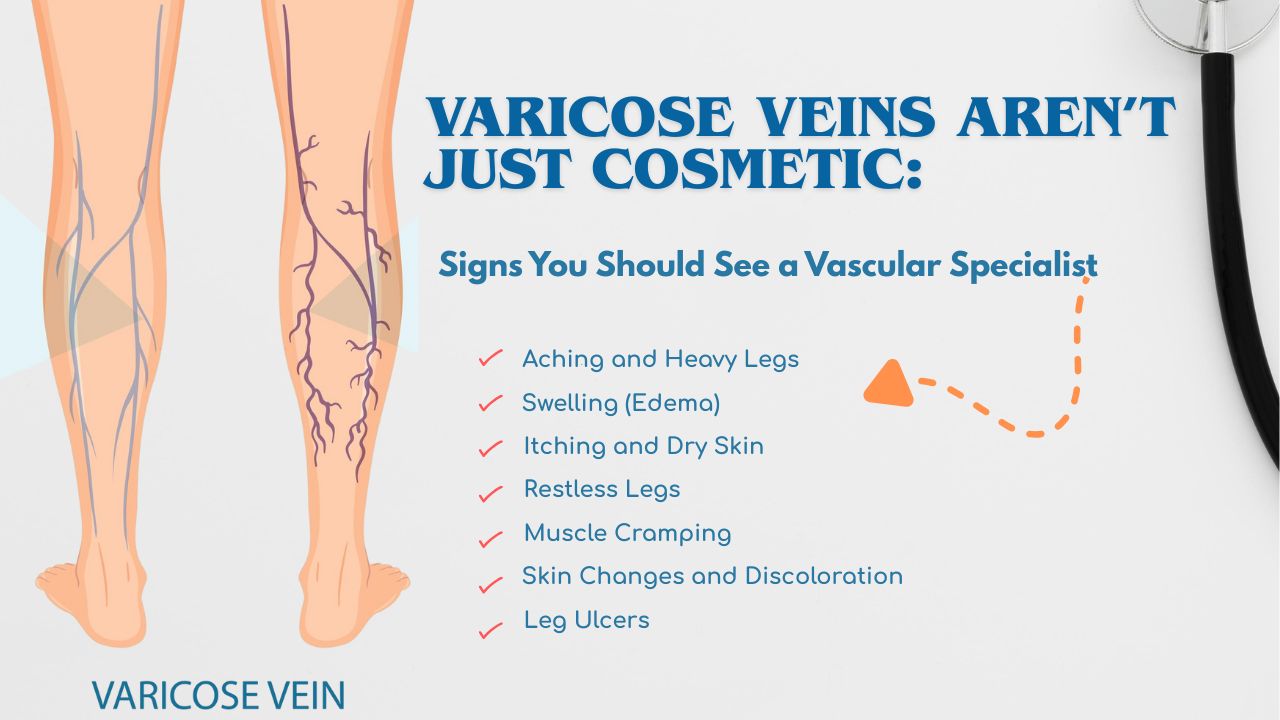
  1. Aching and Heavy Legs:This is one of the most common complaints. It’s that feeling of dull, throbbing pain or a sensation that your legs are made of lead, especially after a long day of standing or sitting.
  2. Swelling (Edema):When blood pools in the veins, fluid can leak into the surrounding tissues of your feet and ankles, causing them to swell by the end of the day.
  3. Itching and Dry Skin:The skin around the varicose vein can become intensely itchy and dry. This is because the pooled blood is causing inflammation and affecting the skin’s health.
  4. Restless Legs:An uncontrollable urge to move your legs, particularly when you’re trying to relax or sleep, can be directly linked to poor circulation from varicose veins.
  5. Muscle Cramping:Sudden, painful muscle spasms, often at night, are a frequent sign.
  6. Skin Changes and Discoloration:Over time, the skin on your lower legs may turn a brownish or reddish color. This is a sign that the skin is not getting the nutrients it needs and is becoming damaged.
  7. Leg Ulcers:In severe, long-standing cases, the skin can break down and form a painful, open sore (an ulcer) that is very difficult to heal. This is a clear sign that you need immediate medical attention.

If you’re nodding along to any of these symptoms, it’s a strong indication that you should consult a vascular specialist in Delhi or your local area. A specialist can properly diagnose the issue and prevent it from getting worse.

When Should You Definitely See a Doctor?

Don’t wait for the problem to become severe. You should schedule a consultation with a specialist if:

  • The pain, heaviness, or swelling interferes with your daily activities.
  • The appearance of the veins bothers you and affects your confidence.
  • The skin around the vein becomes hard, discolored, or inflamed.
  • You develop a sore or ulcer on your leg.
  • One of the veins becomes red, hot, and very tender to the touch (which could signal a blood clot).

The Good News: Modern Treatment is Nothing Like What You Fear

For decades, the only solution for severe varicose veins was a major surgical procedure called “vein stripping,” which was as painful as it sounds. It involved large incisions, general anesthesia, and a long, painful recovery.

Thankfully, medicine has evolved. Today, treating varicose veins is quicker, safer, and far more comfortable, thanks to the field of Interventional Radiology.

As an interventional radiologist, my expertise lies in using real-time imaging like ultrasound to guide tiny instruments through the body. This allows us to treat problems from the inside, without major surgery.

The treatments we offer at our vascular and interventional clinic are prime examples of this modern approach. They are what we call minimally invasive pinhole procedures.

What does this mean for you?

  • No Large Scars:These are scarless procedures in the truest sense. We make a tiny opening, about the size of a pen tip, through which we work.
  • No General Anesthesia:You are typically awake with local anesthesia, meaning you avoid the risks and grogginess of being put to sleep.
  • No Long Hospital Stays:Most procedures are “walk-in, walk-out.” You come to our minimally invasive surgery clinic in Delhi and go home the same day.
  • Quick Recovery:You can return to most of your normal activities within a day or two, unlike weeks with traditional surgery.

Common Minimally Invasive Treatments for Varicose Veins

Let’s look at some of the specific minimally invasive pinhole procedures that have revolutionized varicose vein treatment:

  1. Endovenous Laser Ablation (EVLA):
  • How it works:Using ultrasound, we guide a thin laser fiber into the damaged vein through a tiny puncture. The laser delivers light energy that gently heats the vein, causing it to seal shut.
  • What happens next:The treated vein eventually gets absorbed by the body, and blood is naturally rerouted to healthier veins nearby.
  1. Radiofrequency/Microwave Ablation (RFA/MWA):
  • This is very similar to laser ablation, but it uses radiofrequency or microwave energy (a type of heat) instead of laser to close the vein. It’s equally effective and gentle.
  1. VenaSeal™ (Cyanoacrylate Glue):
  • How it works:This is one of the most advanced techniques. A special medical-grade glue is injected into the vein through a catheter, sealing it shut instantly.
  • The benefit:No heat is used at all, which means no risk of thermal injury to surrounding nerves.
  1. Sclerotherapy:
  • For smaller spider veins or varicose veins, we inject a special foam or liquid solution into the vein. This solution irritates the lining of the vein, causing it to collapse and fade away over time.

Why Choose an Interventional Radiologist?

You might be wondering, “Which doctor should I see for this?” While a vascular surgeon is an option, an interventional radiologist is uniquely skilled in these image-guided, non-surgical techniques.

We are the experts who pioneered these minimally invasive pinhole procedures. Our entire training is focused on using X-rays, ultrasound, and other imaging to diagnose and treat conditions from within the body, with unparalleled precision. Whether you are searching for an interventional radiologist in Delhi, an interventional radiologist in Noida, or an interventional radiologist in Gurgaon, seeking out this specialty ensures you have access to the most modern treatments available.

We as interventional vascular specialist belives in providing compassionate, patient-centered care. We understand that dealing with varicose veins can be frustrating and sometimes embarrassing.

Don’t Let Varicose Veins Hold You Back Any Longer

Your legs carry you through life. They deserve to feel light, pain-free, and healthy. Varicose veins are more than a cosmetic flaw; they are a medical condition with real symptoms that can be effectively treated.

You don’t have to live with the ache, the swelling, or the self-consciousness. Modern medicine offers a way out that is far easier than you might imagine.

If you’re in the Delhi NCR region and are looking for an expert opinion, I invite you to reach out. As an interventional radiologist dedicated to scarless procedures, I can help you understand the root cause of your vein issues and guide you toward a treatment that gets you back on your feet—literally.

Take the first step towards happier, healthier legs today.


Disclaimer: This blog is intended for informational purposes only and does not constitute medical advice. Please consult with a qualified healthcare professional like an interventional radiologist or vascular specialist for an accurate diagnosis and personalized treatment plan.